
Running a small business often feels like juggling everything at once — clients, money, marketing, and planning.
If your business feels chaotic, it’s not because you’re bad at business.
It’s because you don’t yet have systems.
Here’s how to organize your small business so it works for you, not against you.
First, organize your time.
Time is your most limited resource.
Start with weekly planning, daily priorities, and clear work blocks.
When your time has structure, your stress goes down.
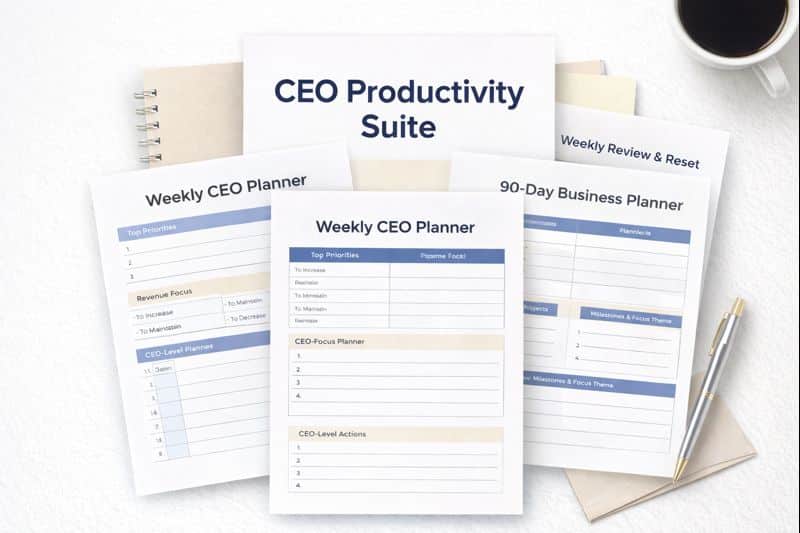
Many business owners find it easier to stay focused using a system like the CEO Productivity Suite, which helps plan priorities and manage time intentionally.
Second, organize your money.
Money chaos creates mental chaos.
You should know how much you earn, how much you spend, and what you profit.
Clarity leads to better decisions.
Tools like the Money Clarity Bundle make it easier to track income and expenses without complicated spreadsheets.
Third, organize your marketing.
Random marketing leads to random results.
Plan content in advance, know what you’re promoting, and track what works.
Consistency builds momentum.
Using something like the Content Planning System helps you stay consistent instead of scrambling for ideas.
Fourth, create repeatable systems.
A system is simply a repeatable way of doing something.
Examples include a weekly review, a monthly money check, and a content planning day.
Systems turn effort into results.
Finally, review and improve regularly.
Your business will evolve, and your systems should too.
Ask yourself what’s working, what’s wasting time, and what can be simplified.
Small improvements create long-term stability.
An organized business is a sustainable business.
When your time, money, and marketing are clear, growth feels lighter — not heavier.